Producing a Great Natural Red Dye from Madder.

Natural Dyeing with Madder has been done for centuries. It was time to have a play!
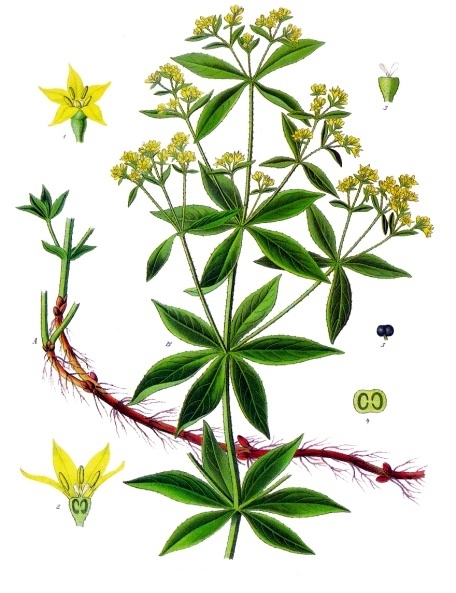
Natural Dyeing with Madder.
Common Madder (Rubia tinctorium) has been used as a dye in many cultures around the world. It is most probably best known for the deep reds found in traditional Indian rugs.
There are many colours and many ways to use madder so instead of doing an extremely large and complicated post on all of the techniques, I decided to break it down into some smaller posts.
Today we will be looking at one of the reds that can be achieved by naturally dyeing with madder. In these experiments we will be using alum mordant and a neutral pH of 7.
For these instructions I am going to use powdered madder that can be bought from your regular natural dye shop, as I do not have access to the plant.
What you will need for Solar Dyeing
Prepared dye material. For these experiments I have used wool roving, 2ply wool and cotton fabric. All of the materials have been prepared with alum mordant. If you would like to see how to wash and mordant your fabric, please press on the buttons below.
You will also need:
Glass Jars
Hot Water
Bowls
Madder
Scales
Rubber Gloves
Chalk

Measurements
The first thing we need to do is measure out our ingredients. You will first need to know how much fibre you are dyeing. You want its weight while dry. This is called WOF (Weight of fibre).
You will need 30% of madder to your WOF. For example if you are dyeing 100g of fibre you will need 30g of madder.
Solar Dyeing with Madder
We are using the Solar dyeing method with the first lot of experiments.
Step1. Place your madder in a heat proof bowl and pour over some boiling water. Allow to cool
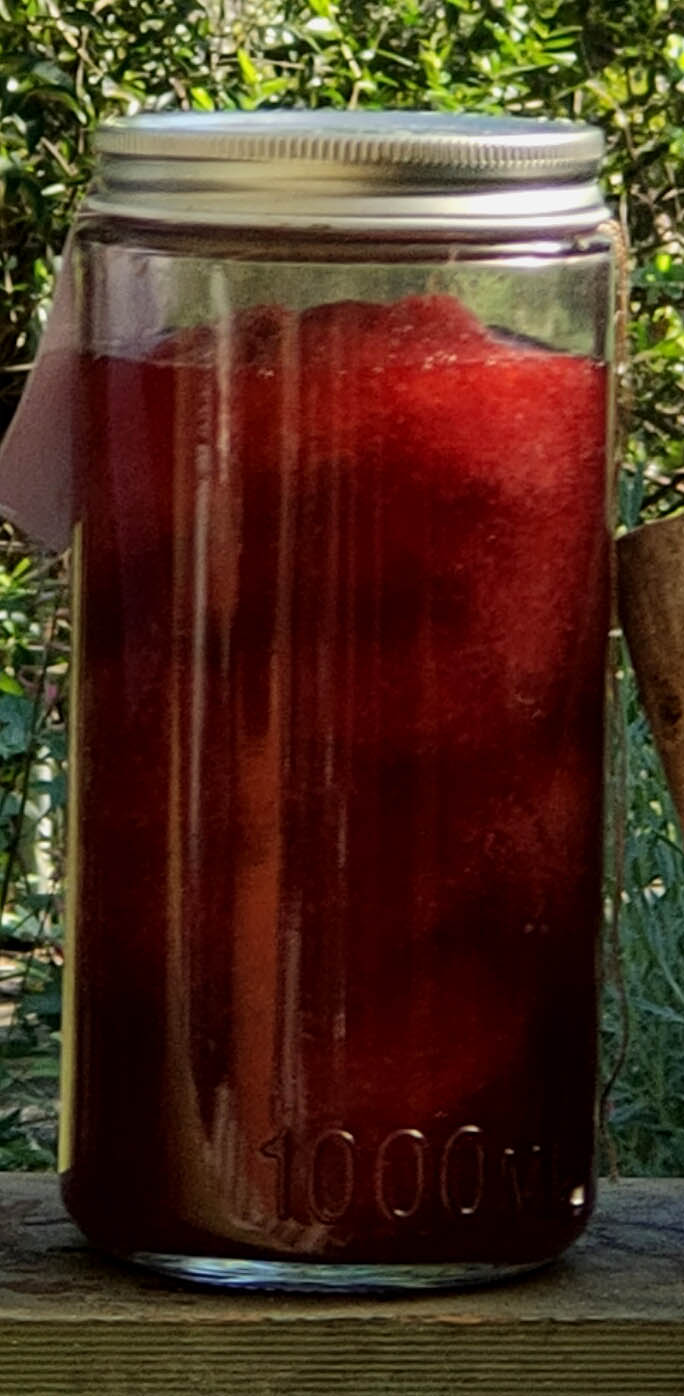
Step 2. Place your mixture into a glass jar. At this stage I have also added some chalk to the water. Madder likes a hard water so if you have soft water, you may want to add some chalk.
This was then left in the sun. A day or 2 would most probably be enough when using powder but I actually left it out for a week to make sure. If you are using plant material I would leave it for at least a week and maybe 2 weeks if it has not been very hot.
Step3. Strain your dye bath and put back into the glass jar adding your wet fibre. Again I have left this for a week, but if the temperature has not been very warm you can leave it much longer.
Step 4. Take your fibre out of the jar and leave to dry. Once dry you can then give it a rinse. The colour of your materials when first taken out of the jar will look quite dirty and murky. This is because the powder is very fine and muddy in colour. Once you have rinsed it you will see the true reds appear.
Just remember if you put wool under a running tap it may cause it to felt a little, especially if you are dyeing roving. I always like to rinse my wool in several bowls of luke warm water. When it comes to madder you may find it needs a lot of rinsing due to the fine powder.
Step5. You can now keep doing exhaust baths for as long as you like. Just add more material and leave it out in the sun again. You will find that madder is great for several exhaust baths.
Results
Roving
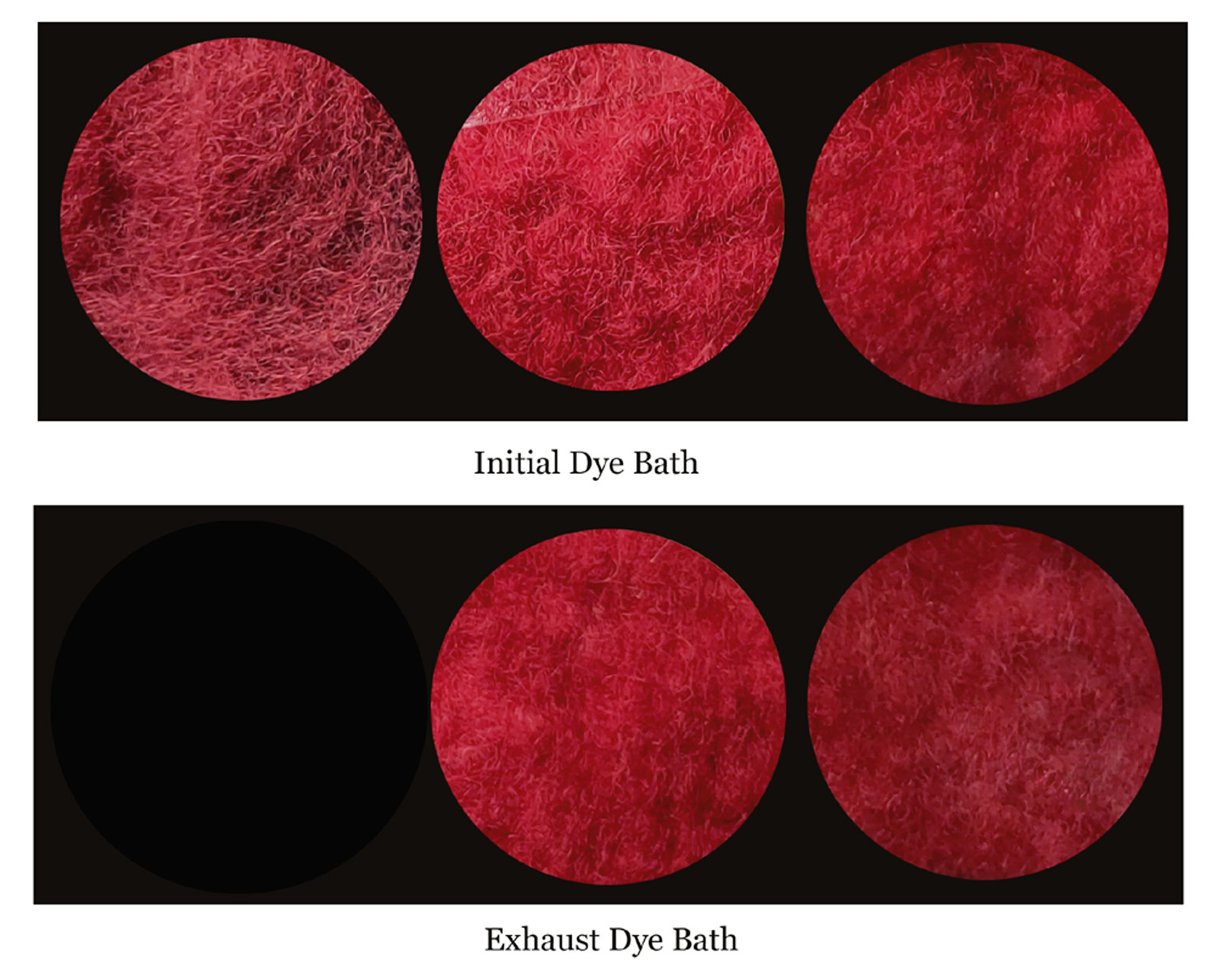
This is the results from the dyed roving . Roving is shown in the first column. The second column shows the roving felted and the third column shows the felt after 4 weeks in the hot Aussie sun.
As you can see we have some beautiful vibrant reds with no fading at all after being left out in the sun.
The exhaust bath was just as good as the initial bath with little to no difference in colour.
Wool Thread
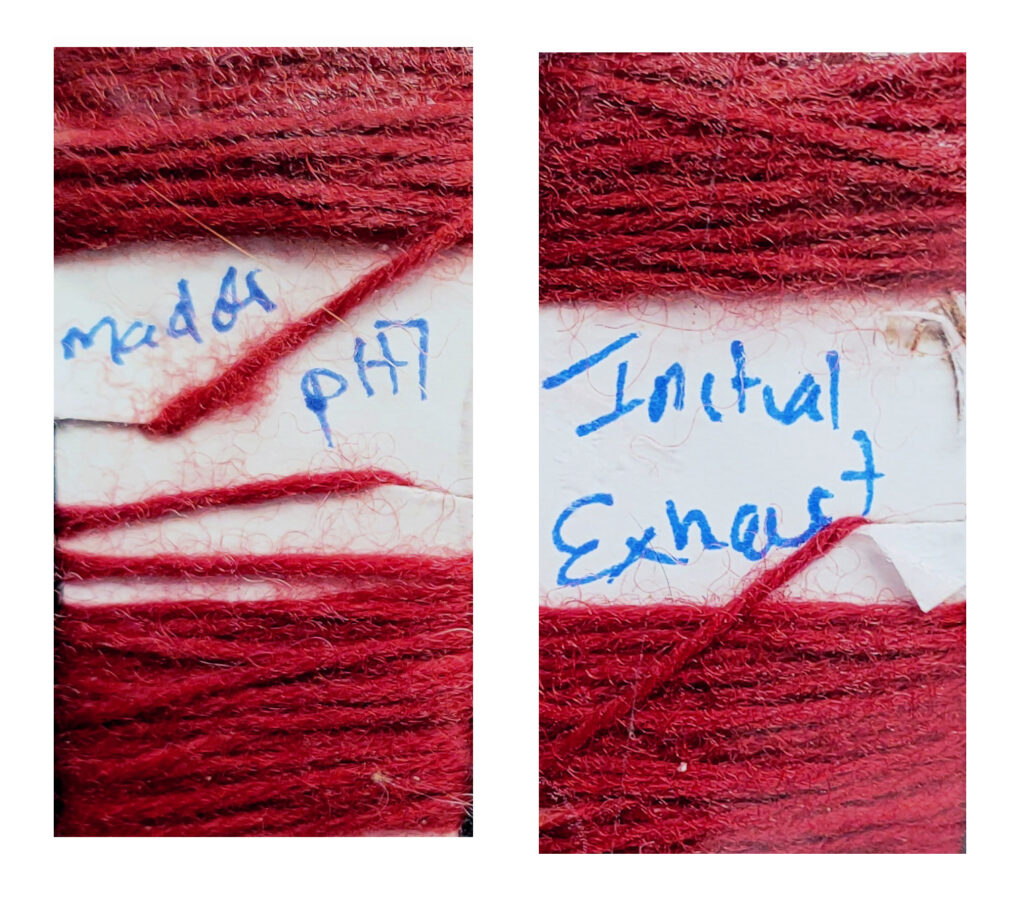
This is the 2ply wool thread that I dyed. The first picture is the initial and exhaust after dyeing. The second is after 4 weeks in the sun. As you can see, the same great colour with no fading.
Cotton
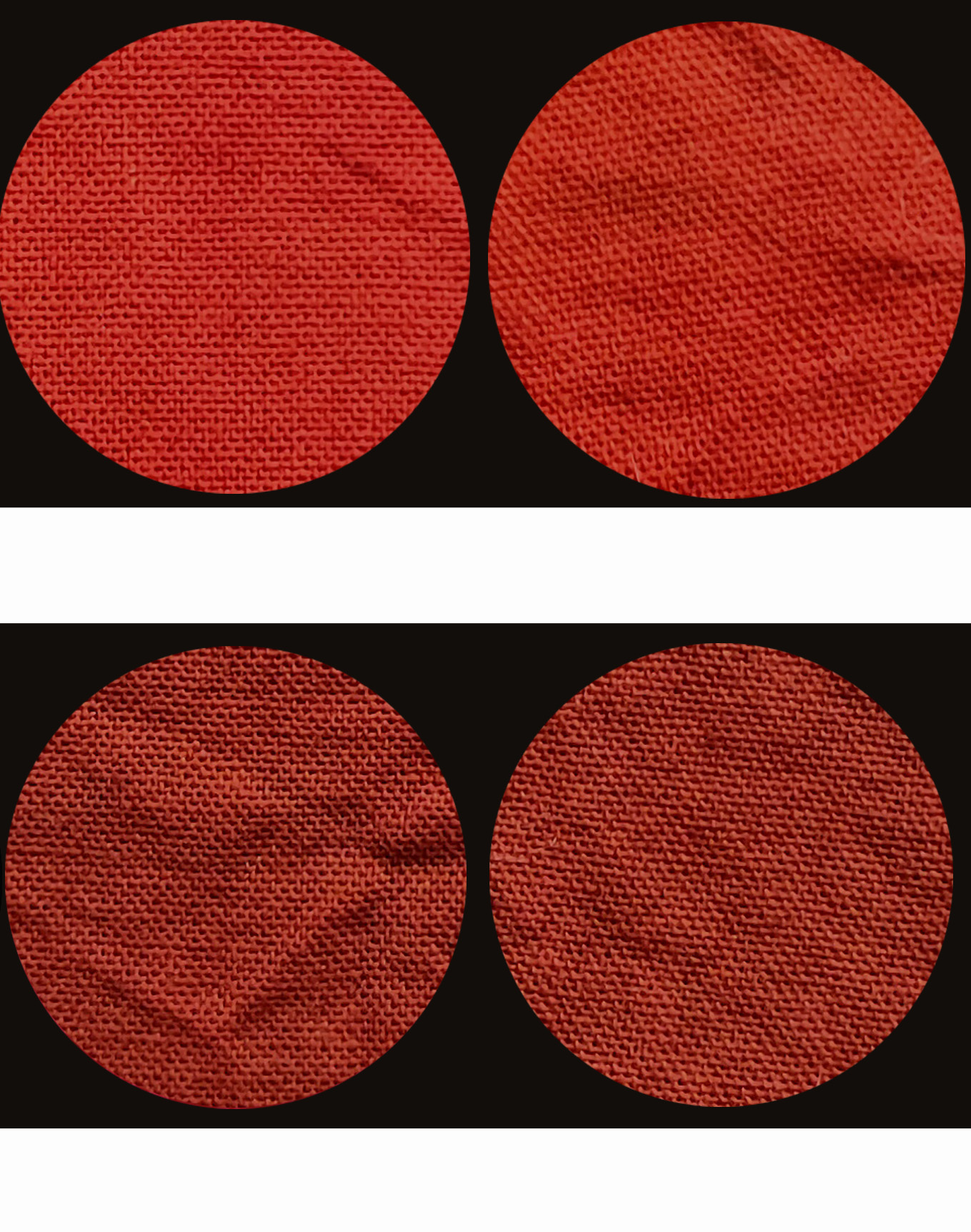
And here we have some cotton fabric. It came out a different type of red but still had great colour fastness after 4 weeks in the sun.
The second row is the same experiment with an additional step. After the cotton was taken out of the solar bath I gave it a quick rinse and then submerged it into some iron water for 30seconds. This gives you a lovely darker brown red.
I make my iron water by basically leaving some old rusty iron bits in water in the sun for several months. You can refer to the post on iron mordanting protein fabric for more information.
Further Tests with Madder
I also did a heat test with the madder dye. I wanted to see how many exhausts I could get out of the 1 dye bath and figured I didn’t want to wait 10 weeks using the solar method.
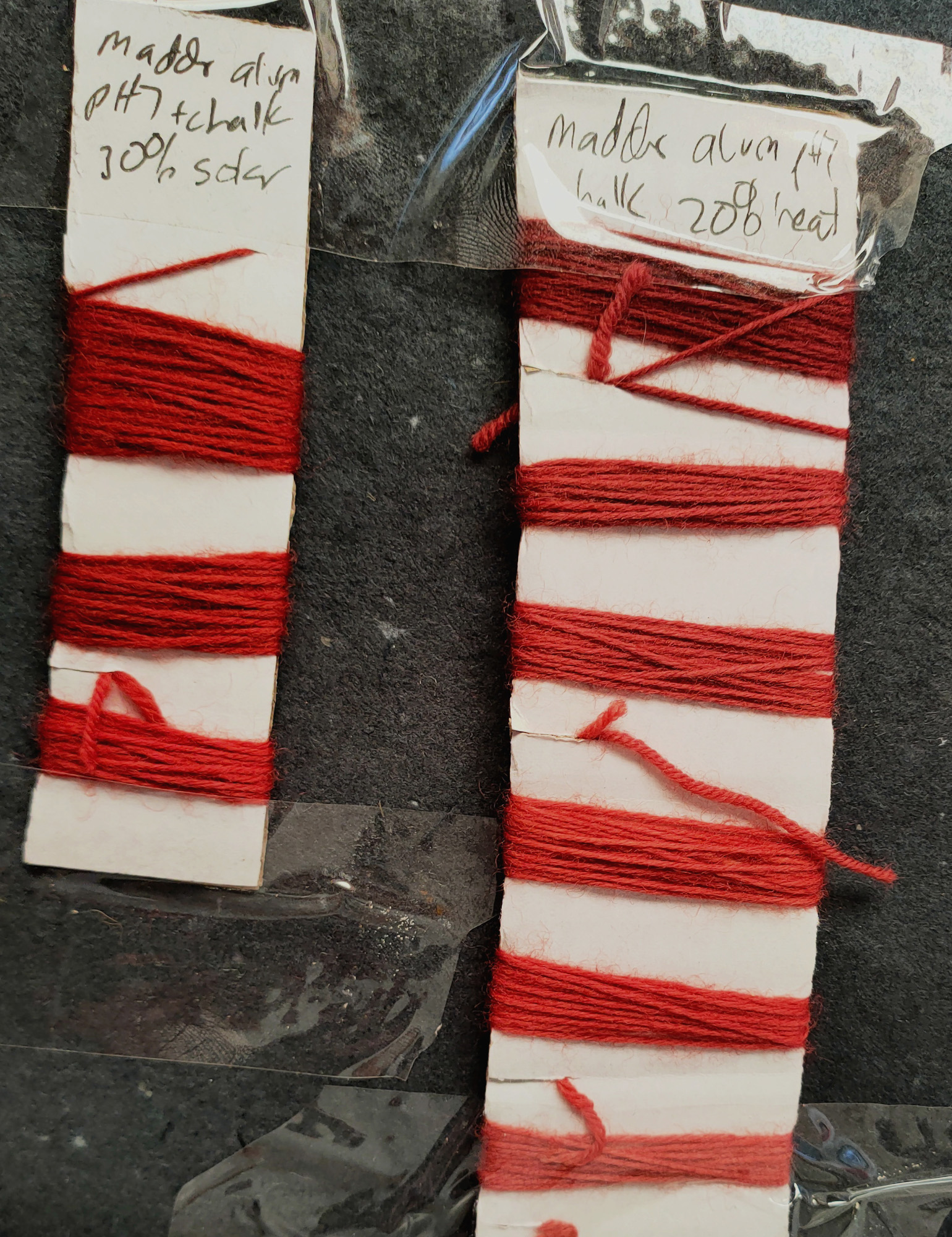
For this experiment I used 2o% WOF that was heated in a saucepan by itself for 1 hour keeping the temperature below 80 degrees Celcius. I did also add chalk to this dyebath before heating. This was then left to cool before my wet wool was added. The dyebath was then heated for an hour not going above 80degrees. The threads were then left to cool in the bath for several hours.
The picture above shows the heat results next to the solar. I gave up after 6 dye sessions from the one dye bath but as you can see, I could have kept going. The heat technique was obviously quicker and could in the future give me a lot of dyeing for my buck, but I actually preferred the colour from the solar dyeing. It might be hard to tell from this photo but it actually was redder than the heat dyeing which had a slight apricot tinge to it. It was still a beautiful colour and one I may want to use in the future, but for the moment I prefer to solar dye both environmentally and colour wise. I just need to keep finding my patience.
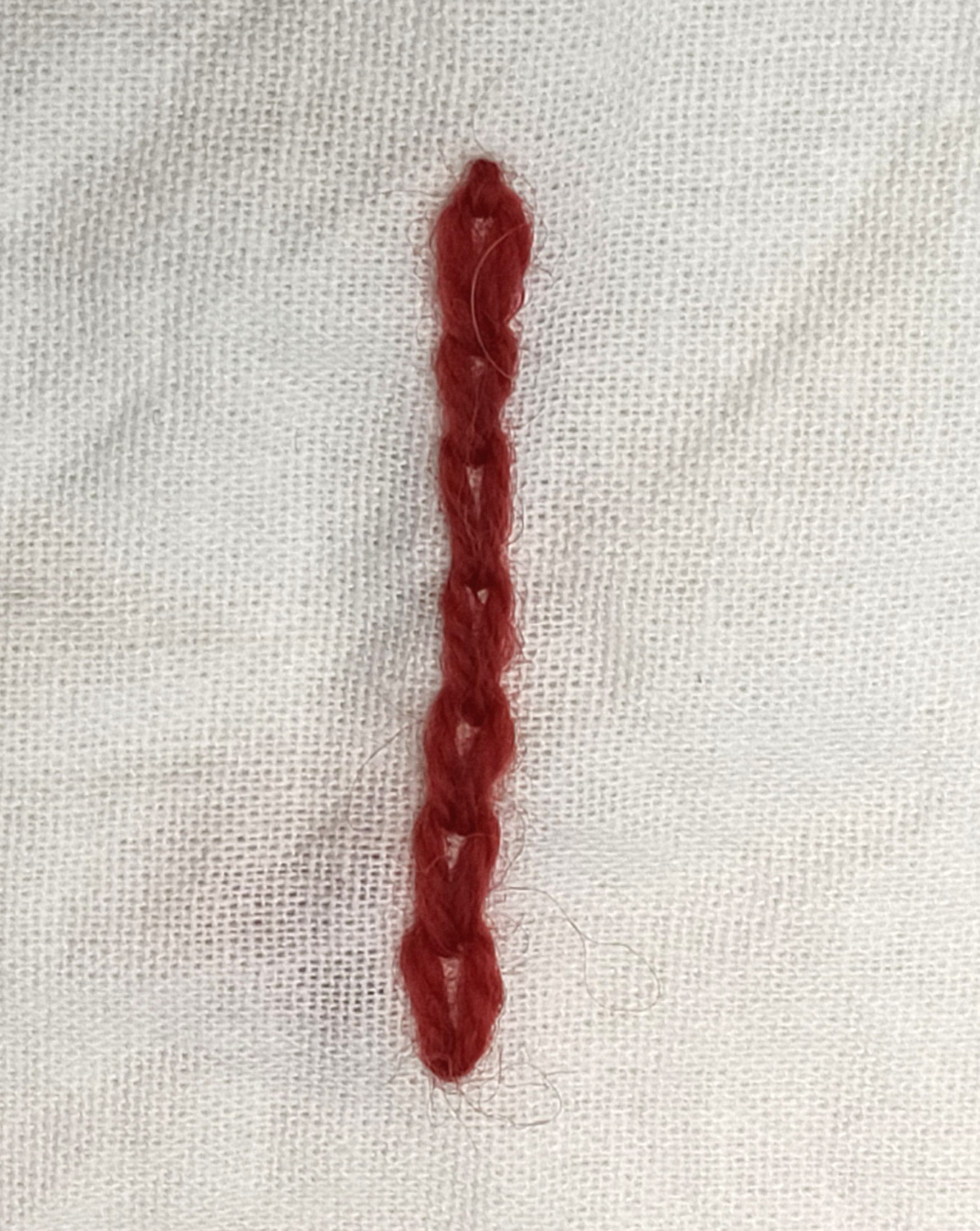
The last test to report on was a quick wash test. Now I was dealing with red and I think everyone I know has had a bad experience with red thread getting wet during their embroidery life. It always seems to run and I was expecting the same here. But no bleeding at all occurred. I was totally shocked and am not sure I quite fully trust the result. But there you go. I can only report what happens. 🙂
Join us on Instagram www.instagram.com/DyetoCraft
Etsy Shop Now open
If you like the idea of using organic naturally dyed threads in your craft but just don’t have the time, come and have a look at our Etsy Shop where you will find an array of beautiful colours provided by nature.