Slow Stitching with Natural Dyes: Beautiful Indigo Part 1.

A New Ambitious Slow Stitch Project starting with Indigo!
The new Project!
If you have read some of the articles on this site you will know that as well as doing a lot of experiments on wool, I have also thrown in a few, here and there, on cotton. In fact I have dyed with cotton over many years and use it regularly in my own projects.
I am now looking at expanding the product lines in my Etsy shop and am naturally looking at some cotton threads and materials for some exciting new designs. The problem is, I have never really formally and definitely not methodically experimented on cotton. So now is the time!
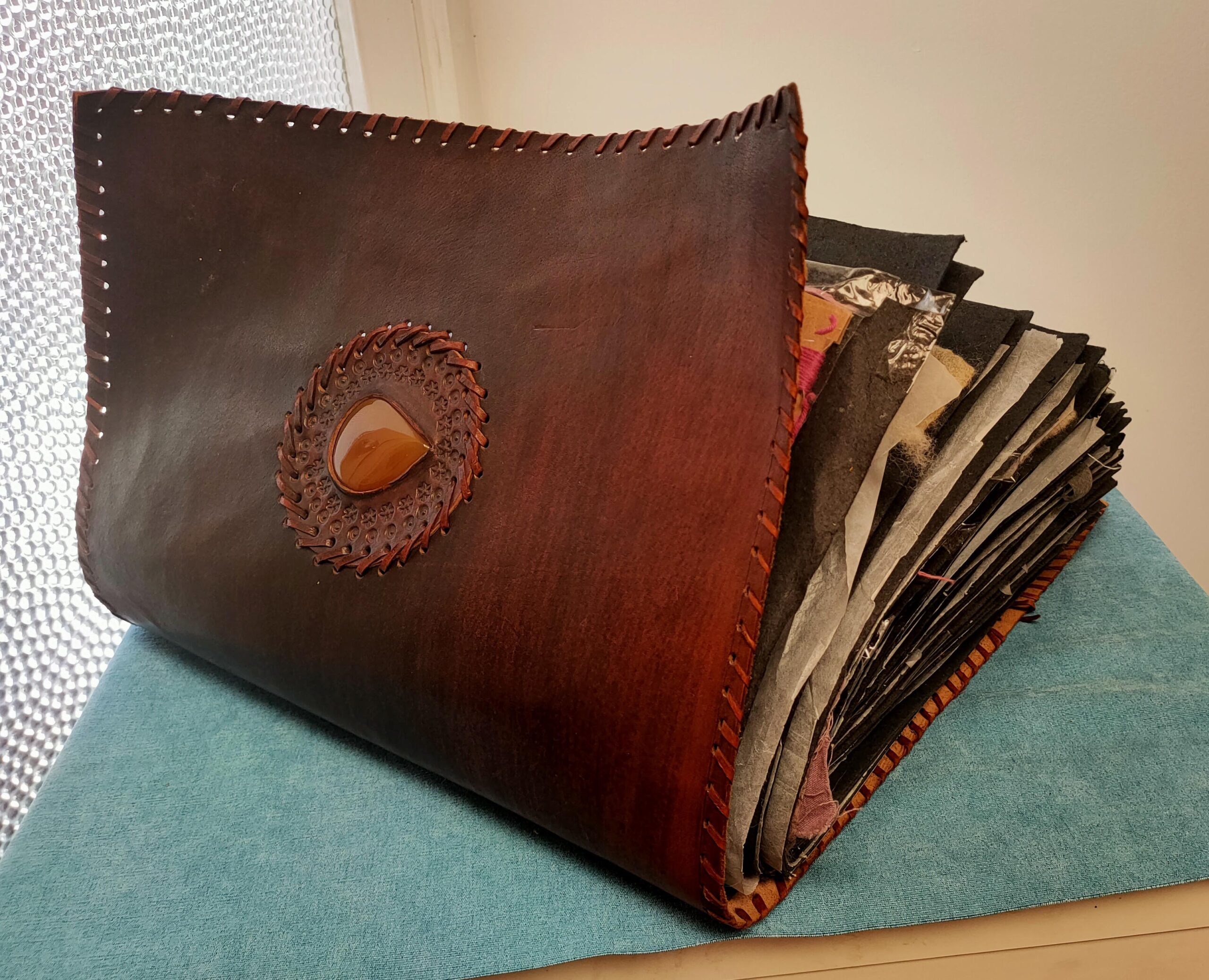
The next problem was what to do with the materials and threads I have experimented on. I have 2 extremely large leather bound journals, that take up a lot of room, full of my wool experiments. In fact I will most probably be a starting a 3rd early next year. I really did not want more books lying around the studio.
So I have decided to make a quilt. Yep a Slow Stitch Quilt. Something practical as well as hopefully beautiful that I can throw over my knees on a cold winters day and still have everything together for future reference.
Starting with Indigo
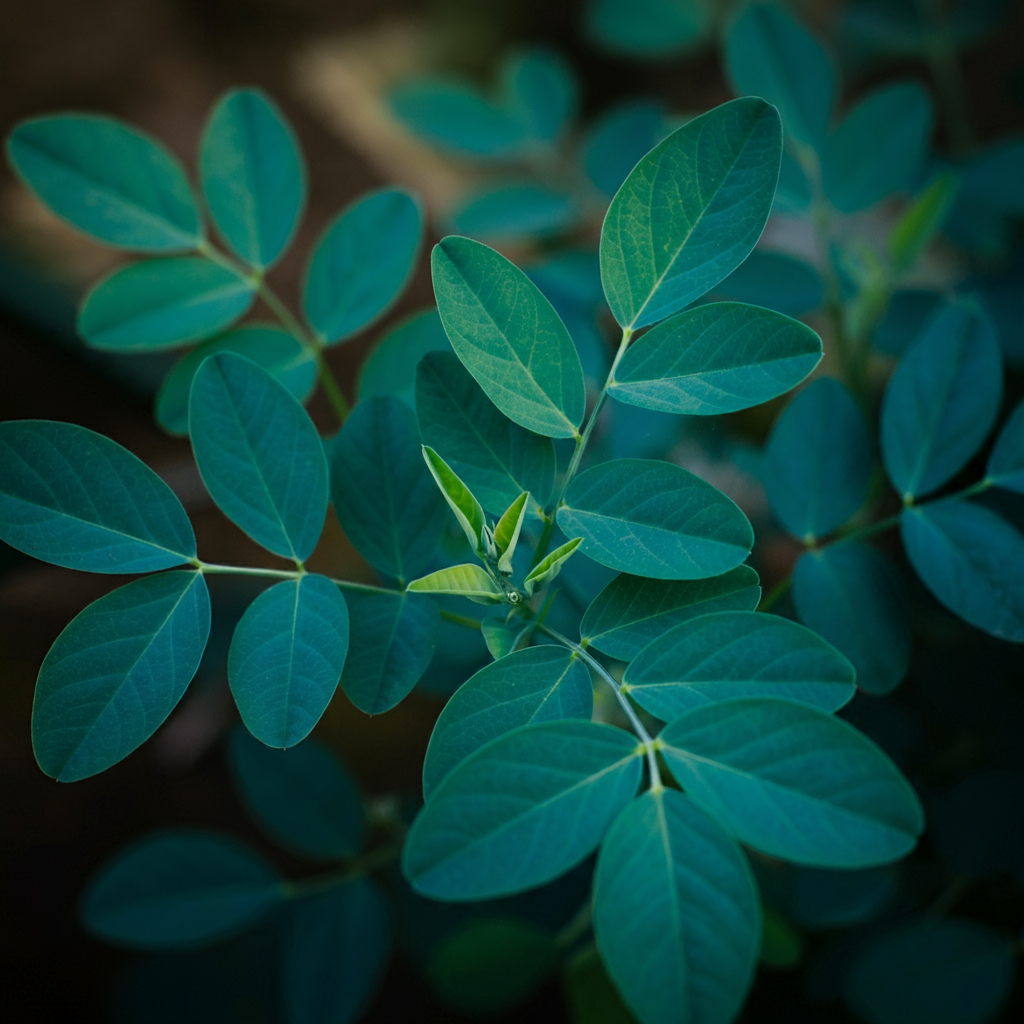
So where to start? I decided that indigo was most probably the best place. Not only do I love the blue it produces, I have used this dye in quite a lot of other projects and pretty well know what I am going to get. Seeing as I really had no idea about the design of the quilt at this stage I decided to go with a dye I knew well.
The next thing was to decided what materials and threads I was going to experiment with, so I went to my local shop as well as looking at what I already had and came up with the following.
Materials
Unbleached natural calico roughly 10x 10cm
White homespun cotton that had obviously been bleached roughly 10 x 10 cm
A cotton linen blend roughly 10 x 10 cm
Threads
Perle 8 roughly 8 metres
Stranded Cotton roughly 4 metres
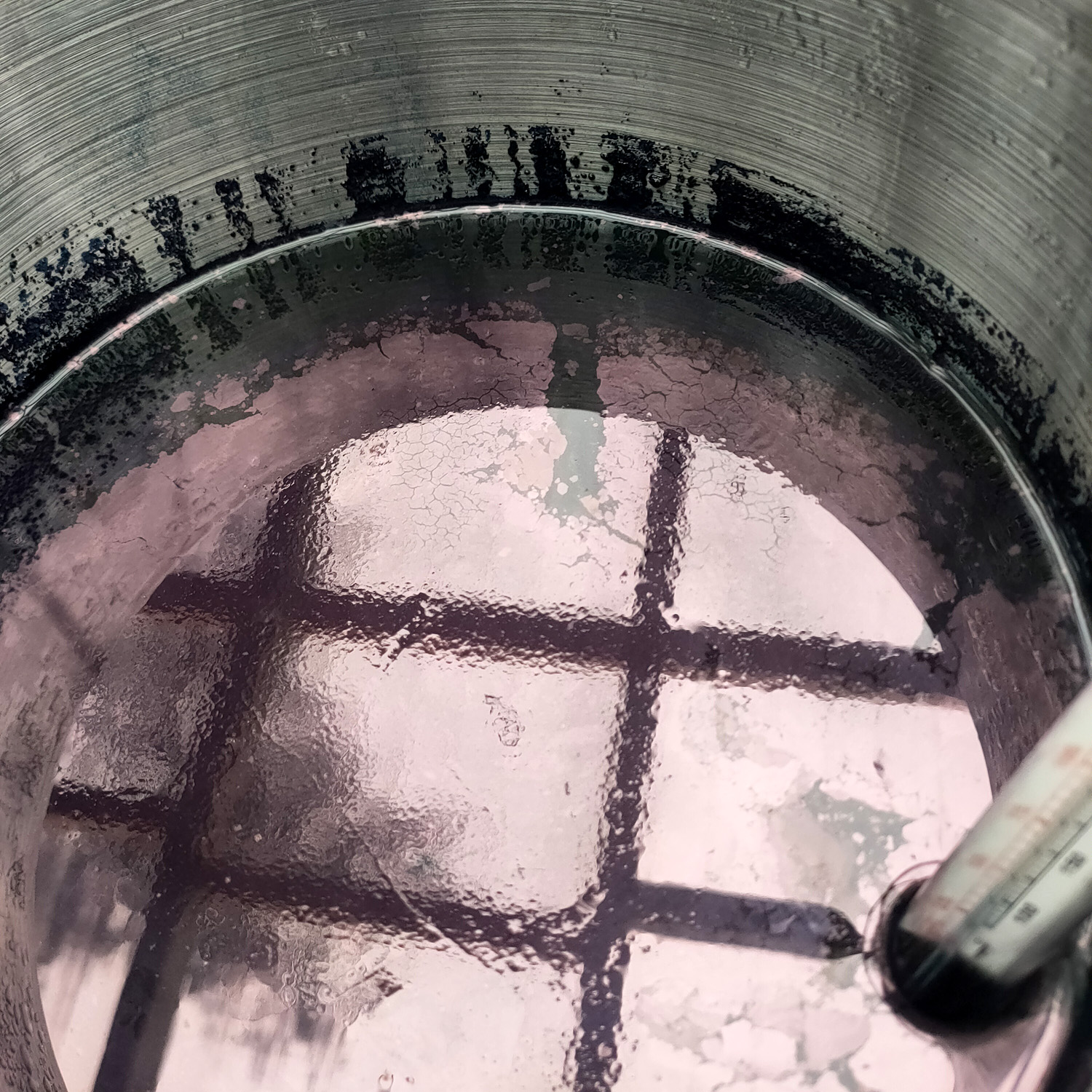
The experiment with Indigo
I won’t go over the actual experiment step by step as I have already written about these processes before. However for those of you that would like to have a go at this yourself, this is what I did.
Step 1. The materials and threads were scoured the same way I always scour plant based materials. You will find all of the instructions here:
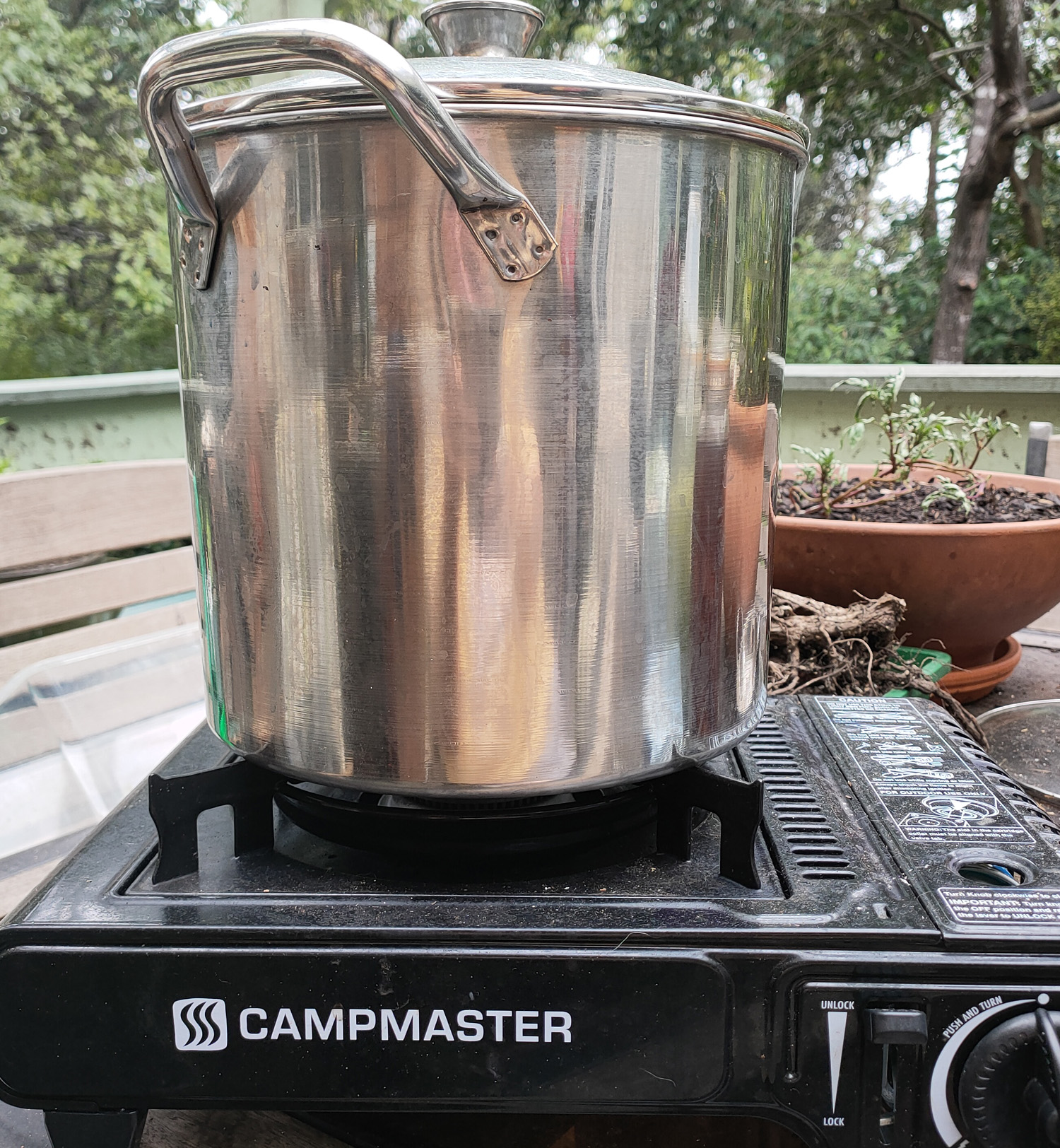
Step 2. I then proceeded to dye in an indigo vat process. No mordanting was done. 3 sets of each material and thread were dyed for each of the following times.
1 quick dip for threads – extra light
10 sec for threads and fabric – light
2 x 30 sec for threads and fabric – medium
5 x 30 sec for threads and fabric – dark
You will find information on my Indigo vating process here:
Step 3. You should now have 3 sets of extra light, light, medium and dark, perle and stranded threads. As well as 3 sets of light, medium and dark of each of the materials.
Set 1 was left to dry as is.
Set 2 was individually placed into an iron bath for 30sec. Rinse after straight after the bath.
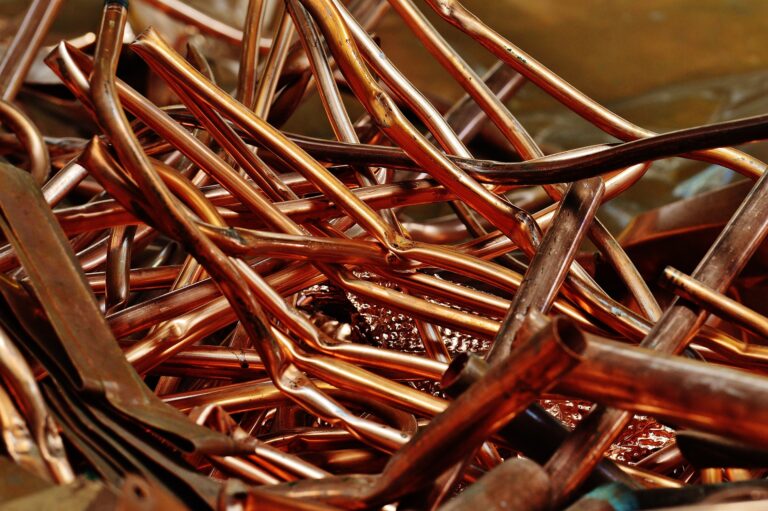
Set 3 was individually placed into a copper bath for 30sec. Rinse straight after the bath.
You will find information on how to make your own iron and copper baths here:
Step 4: Leave everything to dry before rinsing the materials and threads until the water runs clear.
A further experiment with Indigo
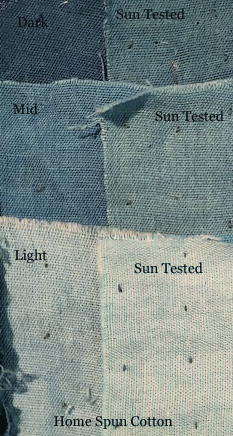
One of my main objectives while doping these experiments was to see how light fast the indigo dye was on cotton. When everything was dry I decided to divide everything in half. One half was left in my studio, while the other half was left out in the full sun for 4 weeks.
Indigo Material Results
This shows the results of the Indigo Home Spun Cotton which was not put into an afterbath. As you can see indigo does fade in sun light. Just like an old pair of loved and worn jeans.
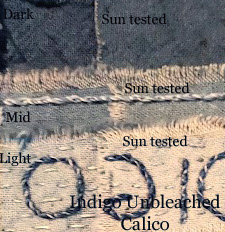
In this picture we have the Unbleached Calico. I apologise for the picture…..I forgot to take photos before I started the embroidery ….but hopefully you can see the material underneath. Slightly better with the fading and slightly darker colours.

And this is the Cotton and Linen Blend. Very similar results to the Cotton
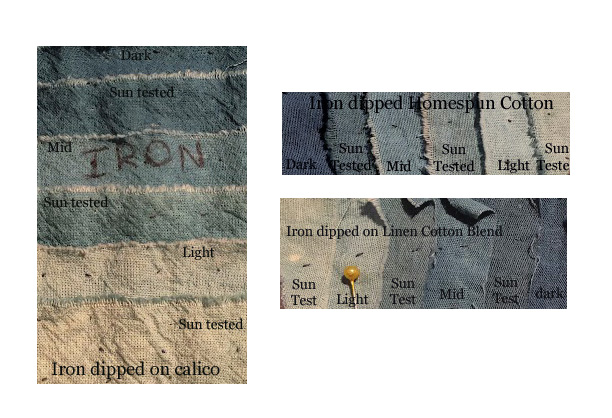
These are the results for the ironed dipped materials. There is only a slight saddening of the original colour. If you wanted it more exaggerated you could leave the material in for a little longer. The material still does fade, however the fading is not quite as bad as the original indigo set.
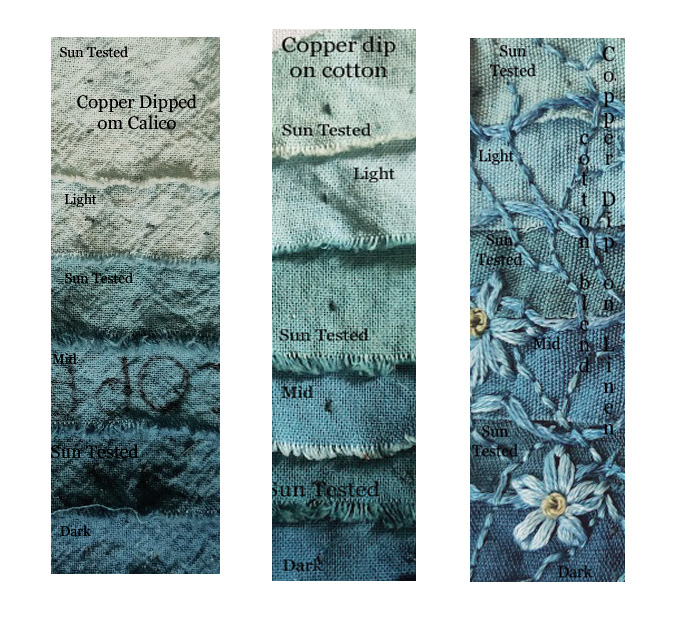
This is the copper dipped results. (Sorry about the embroidery!). The colours were greener in tone….especially the lighter colours with slight fading occurring.
Indigo Thread Results
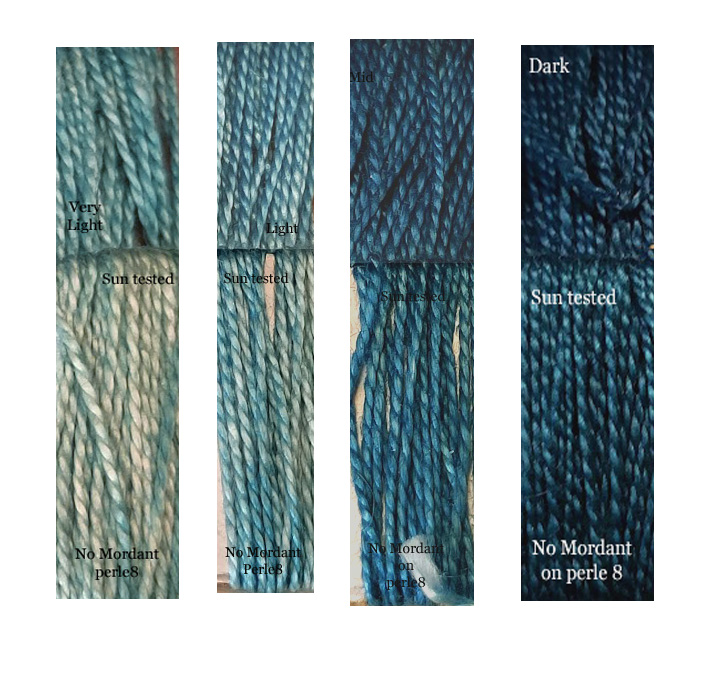
Here we have the Perle 8 cotton with no mordant. There is some slight fading with the lightest colour yellowing in the sun.
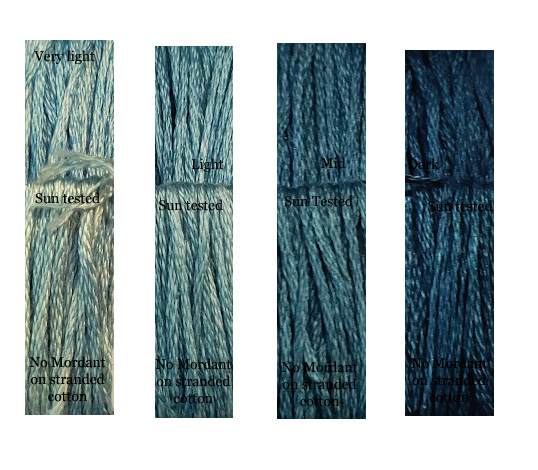
Here we have our stranded cotton with very similar results.
This is the ironed dipped perle cotton. Only slight fading however the very light dip turned completely grey.
Here we have our stranded cotton with very similar results.
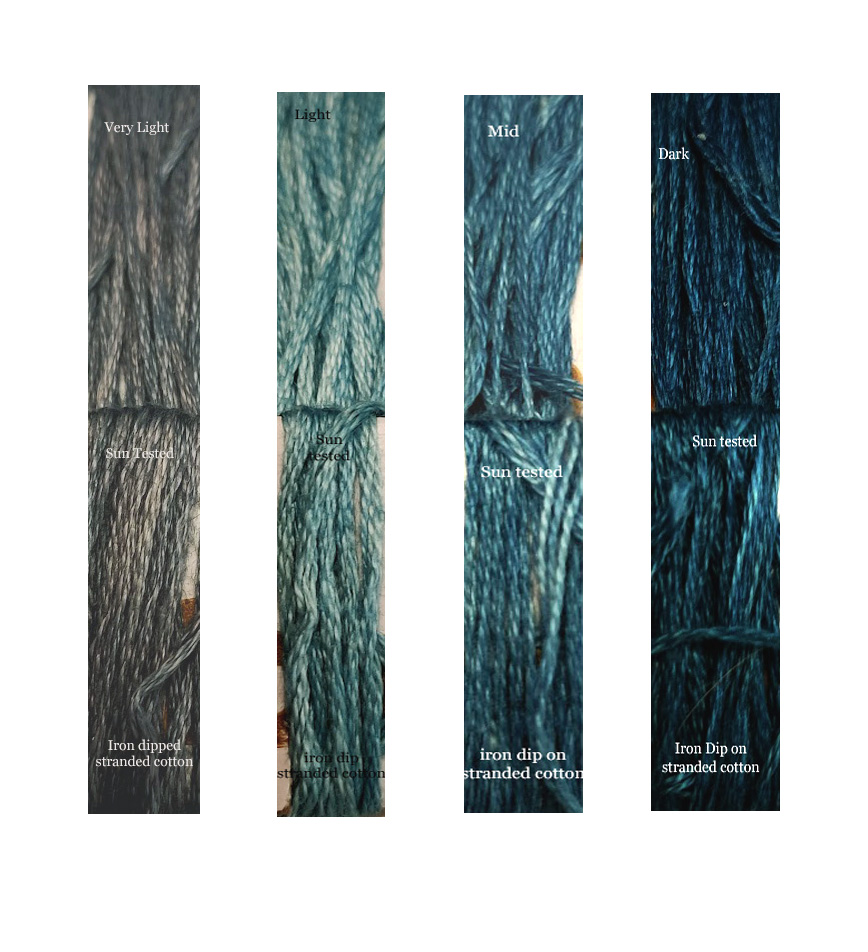
These are the copper dipped threads. The main difference here is the greenish hue….especially with the very light colour.
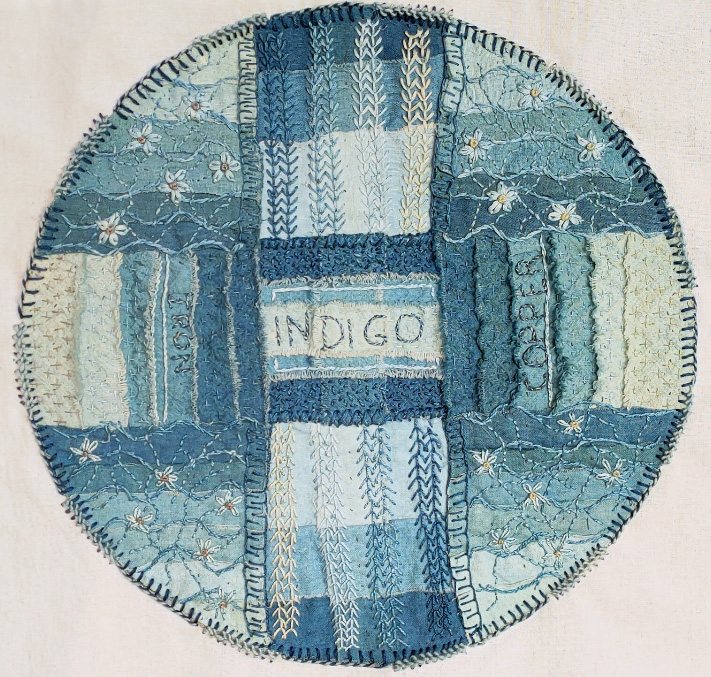
Slow Stitching with my Indigo Experiments
So now the fun part….playing with my new dyed materials and threads! I will come back with part 2 on how the slow stitched panel was completed. Have fun:-)
Join us on Instagram www.instagram.com/DyetoCraft
Etsy Shop Now open
If you like the idea of using organic naturally dyed threads in your craft but just don’t have the time, come and have a look at our Etsy Shop where you will find an array of beautiful colours provided by nature.